

Executive Summary
Canada’s alternative investment market is entering a new phase defined by complexity, discipline, and new return drivers.
This report examines the forces reshaping alternative investments and offers a talent roadmap for leaders navigating a future where innovation, digital enablement, and risk management are critical.
Key takeaways:
- Return drivers are evolving: Income, operational value creation, and downside protection are replacing multiple expansion.
- Capital is rotating toward stability: Private credit and infrastructure are gaining share; real estate is recalibrating.
- External forces are immediate: Geopolitics and trade policy are directly shaping portfolio outcomes and investment strategy.
- Leadership is changing: Organizations are prioritizing judgment, governance, and experience in complexity.
- Execution will define success: Advantage depends on aligning strategy, talent, and risk management.
Introduction
A shifting investment landscape
Canada’s alternative investment market has begun 2026 with renewed optimism, within a more complex operating environment than in the past decade.
After more than a decade of favorable conditions — characterized by low interest rates, abundant liquidity, and broad multiple expansion — institutional investors are now navigating a period defined by:
Higher Structural Volatility
Geopolitical Tensions
Increased uncertainty around trade policies and supply chains
Recent performance data from Canada’s largest pension funds indicate that long-term investors still regard alternatives as essential to achieving their long-term return objectives, but the drivers of success are shifting from valuation gains to income stability, downside protection, and operational value creation.
Our latest report examines the forces reshaping alternative investments and offers a talent roadmap for leaders navigating a future where innovation, digital enablement, and risk management are critical.
From Our Network:

Alternative investments are undergoing a structural transformation. Leaders in this sector are not only grappling with shifting economic realities and evolving investor profiles, but also with the need to reimagine their business models and talent strategies.
As Massey Henry's report highlights, navigating these changes will require disciplined decision-making, and a continued focus on building the leadership capabilities needed to succeed in increasingly complex investment environments.
A Shift Toward Resilient Return Profiles
Recent Canadian institutional performance highlights a rotation toward more resilient return profiles, with greater reliance on income and downside protection
The latest reporting cycle for major Canadian pension funds and large institutional asset managers shows strong overall results, but with noticeable variation across different asset classes. Several leading institutions achieved high single-digit to nearly double-digit total returns, driven by public markets and the more income-focused segments of alternatives.
On average, Canada's major institutional investors achieved an 8–9% return in 2025.
Private equity remains a core driver of long-term returns, but strategies are evolving.
Recent trends have shifted towards strategies focused on stable cash flows and predictable yields, especially energy transition, and infrastructure.
Meanwhile, real estate continues to be impacted by rising interest rates, affordability issues, and disruptions in global trade.
Geopolitics and Trade
A growing driver of investment outcomes
Geopolitical conditions are increasingly shaping the opportunity set for Canadian alternative investors.
Canada’s economy is particularly sensitive to global trade dynamics, especially those tied to U.S. policy.
Key dynamics shaping the environment
The evolving environment — marked by tariff threats, shifting industrial policy, and rising national security considerations — has introduced a new layer of uncertainty into investment allocation and return expectations.
For Canadian investors, these are not theoretical risks. Trade and geopolitical developments can directly impact:
A growing driver of investment outcomes
- Portfolio company returns
- Cross-border supply chains
- Capital allocation decisions
- Exit timing and valuations
Implications for investors
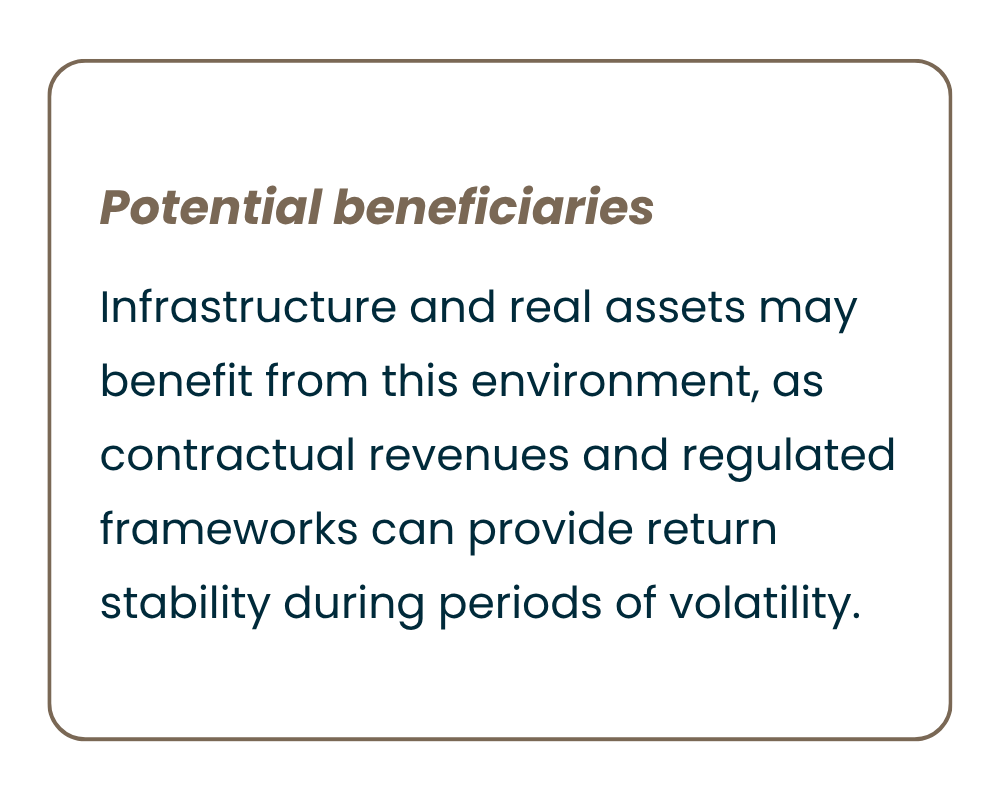
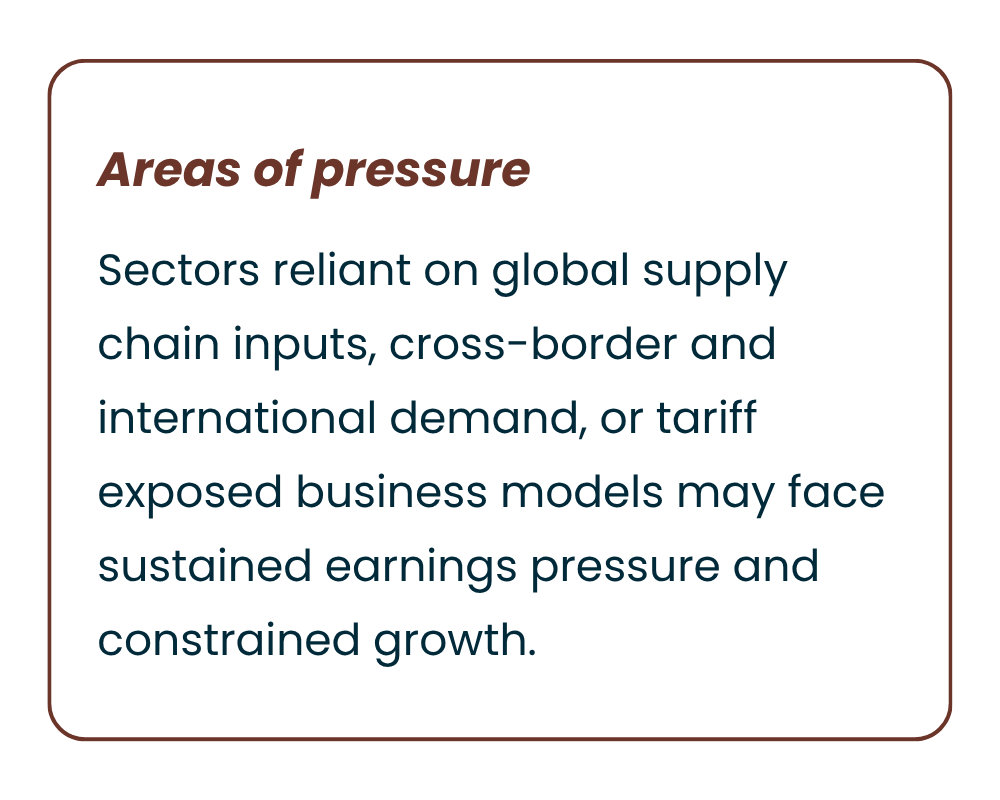
In Canada and other global regions, ”policy risk premium” is rising across the alternative investment landscape.
What are the implications?
Investors and operators must factor geopolitical and trade considerations into core due diligence, rather than treating them as tail risks.
Implications Across Asset Classes
Canadian institutional portfolios continue to allocate meaningfully to alternatives, but evolving dynamics across asset classes are shaping how and where capital is deployed.
Across asset classes, including infrastructure, private credit, private equity, and venture capital, market shifts are reshaping how investors assess opportunity, manage risk, and build resilient portfolios.
As these dynamics continue to evolve, portfolio discipline is emerging as a key competitive advantage.
Portfolio construction considerations
As allocations to alternatives grow, portfolio construction discipline is emerging as a key differentiator.
Critical areas of focus include:
- Rigorous analysis of pricing and liquidity trends
- Scenario-based stress testing
- Planning for slower and potentially lower private market distributions
- Managing exposure in a context of more frequent macroeconomic shocks
In this environment, the ability to balance opportunity with discipline will define long-term performance.
Talent Impact
From deal execution to disciplined leadership
Senior hiring in the Canadian alternative investment sector is undergoing a notable shift. As portfolios increasingly concentrate on long-term assets such as public and private infrastructure, organizations are placing greater emphasis on decision-making, risk management, and operational discipline across more complex investment cycles.
This shift is redefining the leadership profiles required to succeed.
Given the growing focus on longer-duration and less-liquid investments, in-demand leadership profiles are moving away from volume-driven dealmaking. Instead, organizations are prioritizing competencies and career experiences that reflect a leader’s ability to make disciplined capital allocation decisions in environments characterized by heightened volatility and risk.
Given the growing focus on longer-duration and less-liquid investments, in-demand leadership profiles are moving away from volume-driven dealmaking. Instead, organizations are prioritizing competencies and career experiences that reflect a leader’s ability to make disciplined capital allocation decisions in environments characterized by heightened volatility and risk.
There is a clear departure from profiles built on:
Low-cost funding environments
Favorable market conditions
Short-term, multiple-driven exit strategies
In their place, boards and investment committees are prioritizing leaders who bring:
- Proven experience navigating investment cycles
- Deep sector and market knowledge
- The ability to operate effectively within regulated environments
- Credibility across multiple stakeholders, including boards and investors
This evolution reflects a broader shift in the industry: from emphasizing individual deal execution to strengthening the leadership architecture required to support long-term performance.
Critical Leadership Capabilities
Risk, valuation, and investment governance leadership
Risk, valuation, and governance capabilities have become core investment-management priorities.
Boards are placing increased emphasis on:




Senior leaders in these roles must combine:
- Deep understanding of private markets and associated risks
- Strong communication skills to engage boards, investment committees, and investors
Organizations increasingly recognize that compliance-oriented profiles alone are insufficient.
Leaders must have the credibility and experience to challenge investment decisions and contribute meaningfully at the senior level.
Data, analytics, and AI governance leadership
As portfolios become more complex, data and analytics leadership has emerged as a critical senior function.
Boards and CIOs increasingly expect:
- Consistent portfolio transparency
- Exposure analysis across asset classes
- Scenario-based insight to support decision-making
Senior hires in this area are responsible for ensuring that:
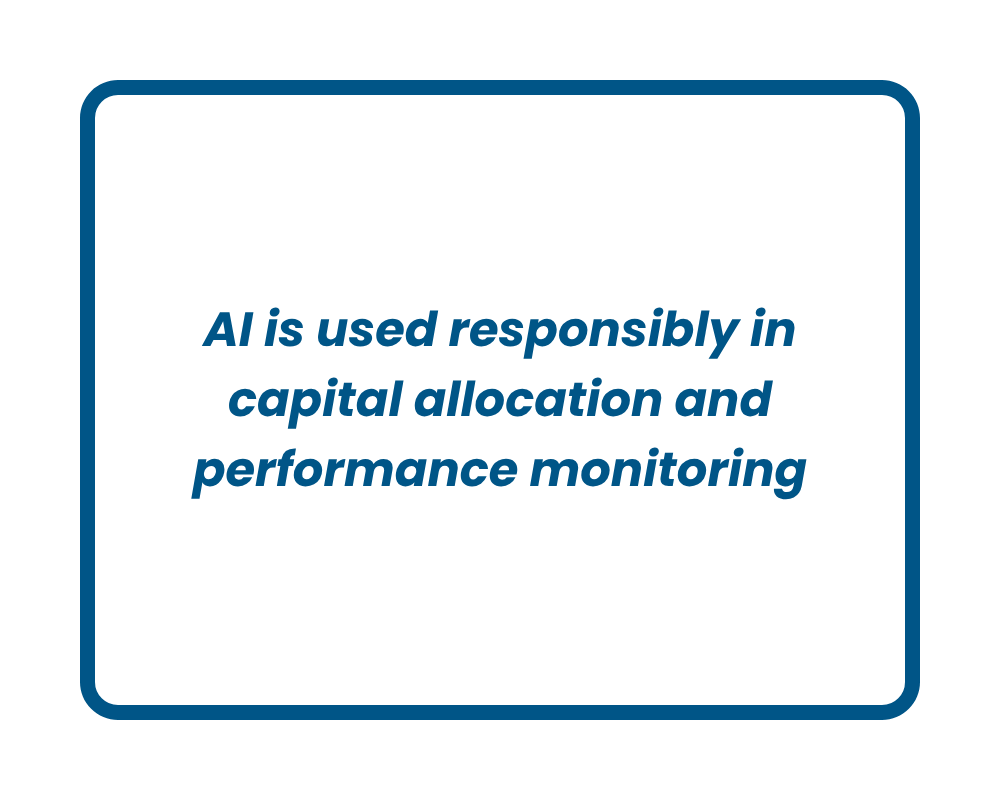
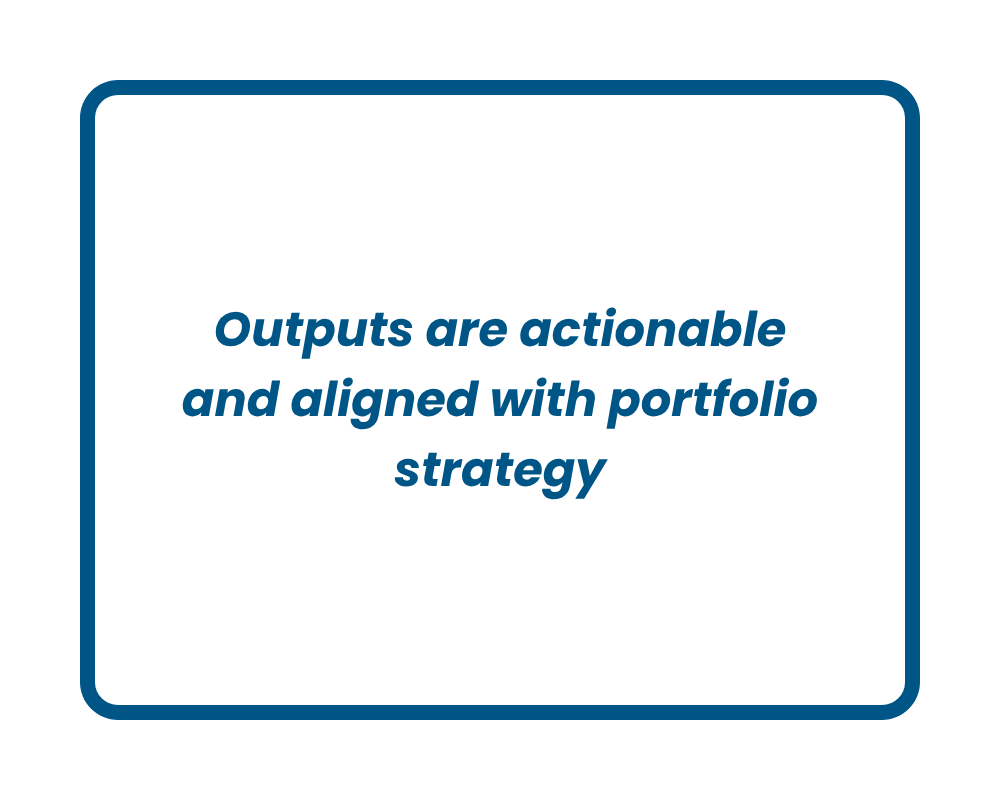
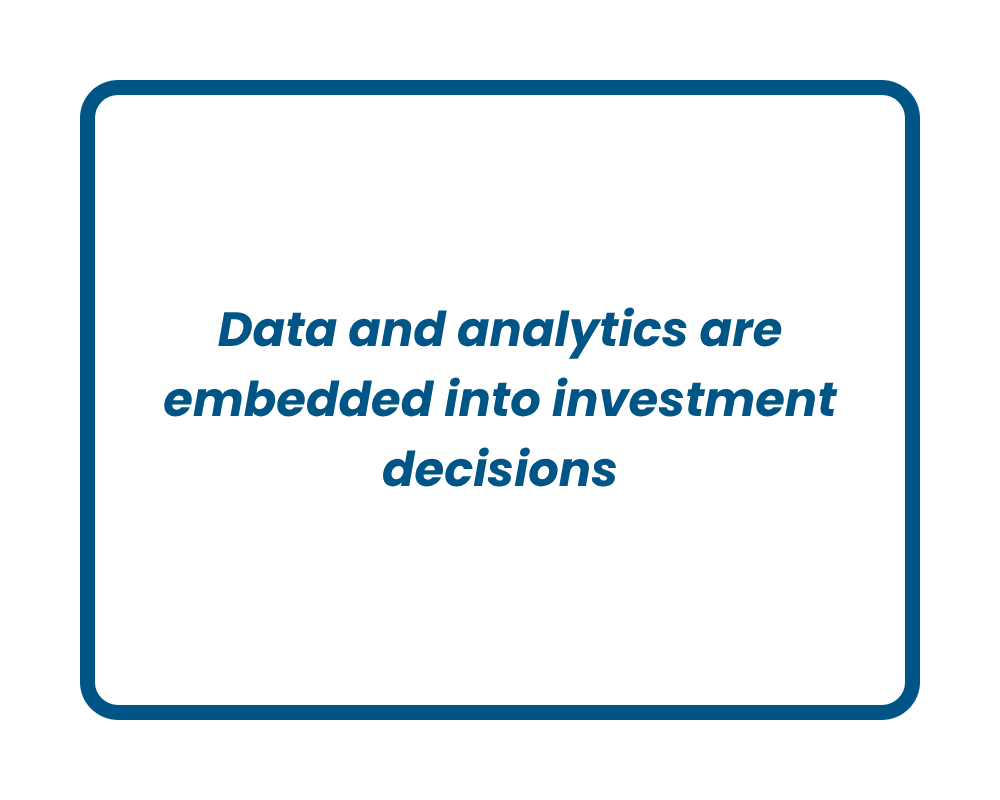
This function is evolving into a core driver of investment insight and governance.
Talent and Succession Priorities
Talent and succession planning are becoming central governance priorities.
Especially given the long-term nature of capital and a continued reliance on internal promotion, senior leadership in this area is focused on:
Aligning succession planning with portfolio duration
Enabling internal mobility across asset classes
Designing incentives linked to long-term, risk-adjusted outcomes
Boards are increasingly attentive to:
- Leadership depth across the organization
- Retention of senior non-deal talent, particularly in:
- Operations
- Risk
- Data and analytics
Increasing competition for talent in a shifting investment landscape
Overall, hiring is shifting toward strengthening decision-making, execution, and governance frameworks, rather than adding individual “star” investors.
Looking Ahead
Positioning for the next phase of alternative investing
The future of Canada’s alternative investment market remains highly attractive, but the drivers of success are evolving.
Recent performance across major institutions highlights a continued rotation toward resilience, with private credit and infrastructure providing stable contributions, while real estate gradually stabilizes.
The years ahead
Alternatives will remain central to institutional portfolios. Market conditions are expected to remain complex and volatile.
Competitive advantage will increasingly be defined by:
Execution capability
Governance strength
Disciplined capital allocation
Outperformance will depend less on broad market exposure and more on the ability to navigate a more contested global landscape through intelligent risk-taking and strong leadership alignment.
À propos de Massey Henry
Executive Search, Coaching, Assessment, and Advisory Services
Ranked among Canada’s Top Growing Companies by The Globe and Mail and named one of Canada’s Best Executive Recruiting Firms by Forbes, Massey Henry is one of North America’s leading executive search and board advisory firms focused exclusively on the financial services sector. With an experienced team of former industry leaders and talent management specialists, the firm combines innovative technology with in-depth sector expertise to provide clients with full-scope executive search, talent assessment, coaching, and leadership advisory services.

Michael Henry
Managing Partner, Massey Henry

John Sanders
Senior Partner

Jeff Hauswirth
Senior Partner, Board & CEO Services

Lisa Newey
Partner